On a Friday afternoon in the Village Hall of North Bovey a healthy congregation of residents and interested parties gathered to listen to Richie Blake talk about the river.
Richie spoke as Chairman of the Teign Angling and Conservation Association, TACA, and the story he shared carried the weight of four years of restoration work across the Teign catchment. It was a story of salmon, certainly, and also a story of habitats, volunteers, partners, data, and the steady craft of learning a river closely enough to help it thrive. For those of us who hold the Bovey in the background of our lives as something constant, it was also a story of beginning.
We see the river in flood and in drought, in bright winter clarity and summer shallows. A river’s presence can feel so reliable that it becomes scenery, and scenery becomes assumption. Richie’s opening graphs were designed to shift some of our comfortable assumption. The numbers showed a sharp decline in salmon runs since the early 1990’s and a healthy concern for the local ecosystem was what brought us together for the afternoon.
It is one thing to sense that rivers across the country carry their own particular story and strain. It is another to listen to the story of your own, in a river that holds familiar names and beloved bends and shares its name with our village. We were told of how living residents have witnessed a very different state of affairs than we see today. Richie did what good speakers do when the subject is heavy. He made the work visible. He made the problem practical. He made the future feel reachable.
Reverence & restoration
One of the images that stayed with people afterwards was Richie’s way of framing the Atlantic salmon as both ancient and newly precious. He spoke about how, in medieval times, salmon served as everyday food for ordinary people, simply because there were so many of them. Today, salmon is spoken of as the king of fish, a creature of awe, a prize, a symbol, a reminder of what abundance once looked like.
That shift from commonplace to precious carries its own lesson. It reveals how quickly a living presence can become rare, and how easily we adjust our expectations without noticing. It also reveals why restoration work matters so much. It sets out to reclaim possibility, one stretch of river at a time, through acts of care that are often modest in appearance and immense in consequence.
TACA’s work sits within that arc of possibility. Through collaborative efforts with local angling associations, trusted partners, and passionate volunteers, the association engages in habitat restoration, pollution reduction strategies, and education aimed at deeper understanding of river conservation among stakeholders. Their ethos carries a commitment to sustainable angling practices, rooted in the health and vitality of the catchment itself.
Richie described the River Teign Restoration Project as a blend of careful targeting and community effort. Funding, partnerships, consent pathways, and monitoring frameworks provided structure. Volunteers provided momentum. He spoke of thousands of volunteer hours over the span of the project and gave a phrase to the kind of value that rarely shows up neatly in a budget: Sweat equity.
The phrase feels immediately understood. It is the currency of village life. It is how community spaces get cared for and how local projects gain their strength. It is how allotments flourish, because an allotment association is built from shared time and shared willingness, the quiet dedication of people who show up in all weathers to keep a place alive.
Hearing Richie speak, it became clear that river restoration carries the same spirit, directed toward a different kind of garden, one shaped by water, gravels, roots, insects, and the migration of fish.
A catchment as a living tapestry
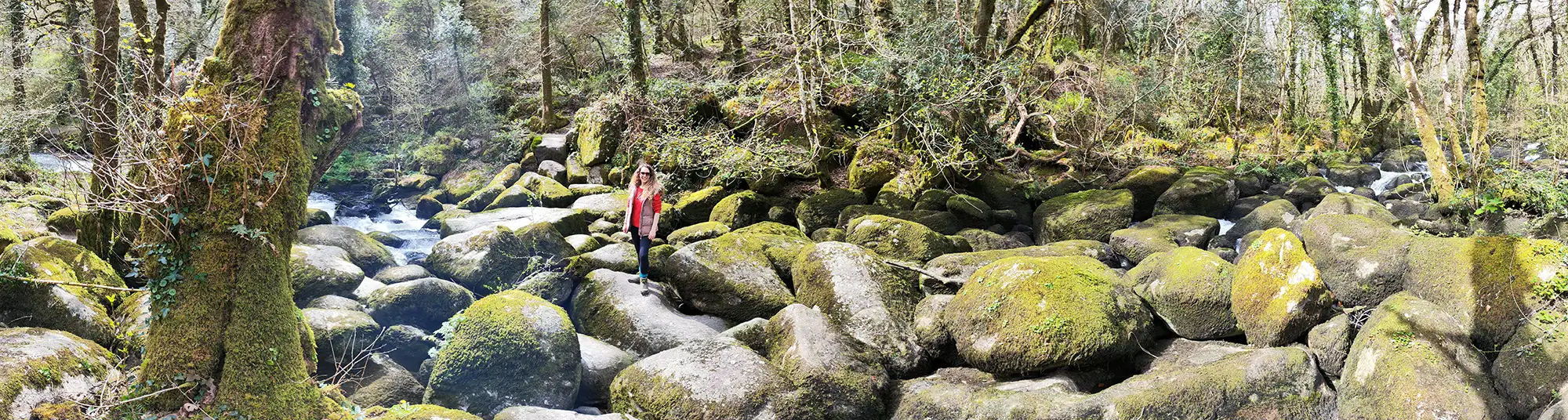
Rivers often look simple on a map, a single line that flows from source to sea. Richie gave the Teign back its true complexity. He spoke about tributaries and confluences, about changes in habitat that happen where brooks enter, where structures alter flow, where gradients and bank types shift. He described the way TACA divides river stretches into workable units based on those habitat changes, often in kilometre or two segments, so interventions can be specific and effective.
This way of working belongs to the deeper art of restoration. It is less about grand gestures and more about clarity. It says: we will look closely enough to place our efforts where they count. It says: we will learn the river in detail, and we will act from what the river reveals.
Richie spoke with real reverence about history as part of that learning. Angling associations on the Teign have a long lineage, and with that comes an archive of observation: catch reports, walked banks, remembered spawning areas, patterns noticed across decades. That continuity creates a map made of lived knowledge, a record of where salmon once spawned and where they still try to return.
The feeling in the room shifted as he spoke. A river becomes something else when you start to hear it described as a system with pressure points and strongholds, a place where outcomes can change through informed care.
The salmon life cycle as a lesson in attention
Richie walked us through the salmon life cycle, and in doing so he quietly changed the scale at which people were thinking. Salmon do not belong to a single season. They belong to a four year rhythm that spans river gravels and open sea, freshness and salt, survival and return.
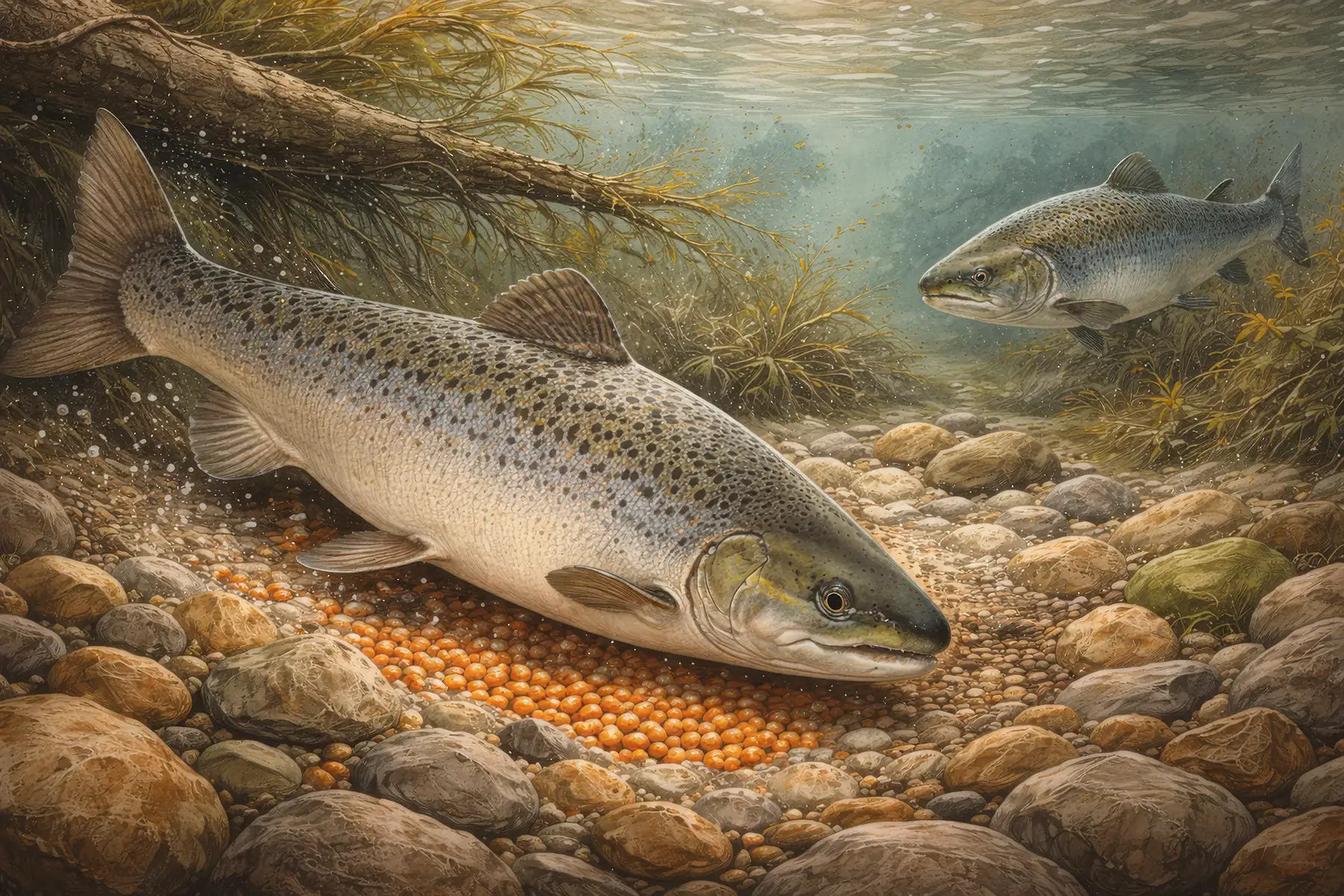
He spoke about eggs laid into the gravel, the early stages of life, and the steep narrowing of survival at each step. The mortality rates in the early life stages are sobering, yet the point of his explanation carried strength rather than despair. It showed where the catchment can make a difference. It showed where habitat matters most.
He spoke about silt and gravels in a way that made the science tangible. Fine sediment fills the spaces between stones, and those spaces are the oxygen pathways that eggs require. When those pockets close, survival drops. Suddenly a concept that could have remained abstract became physical. People could picture the gravels, the silt, the hidden life held between stones.
He spoke about salmon reds, the spawning nests, and he shared a detail that many of us had never heard, that the word red comes from an old Scottish or Gaelic root meaning to tidy or make good. In that framing, spawning becomes an act of river care. The hen fish clears the gravel, shifts the sediment, creates space, and lays the future into it.
That image stays because it carries moral clarity. The salmon does its part through instinct and endurance. The catchment meets it with stewardship.
Simple interventions, lasting change
A major strength of Richie’s talk was how he described interventions in a way that gave people confidence. River restoration can sound like heavy machinery and inaccessible expertise. Richie showed how much of the work is practical, local, and grounded.
He spoke about popular stretches with heavy footfall and how that pressure compacts soils, erodes banks, and increases silt deposition. He described how TACA uses living tree hinging to create horizontal growth that stabilises banks and guides people toward better access points. In one gesture, that supports bank integrity, reduces sediment input, and helps people enjoy the river in a way that protects it.
He spoke about leaky dams, a name that carries humour and clarity. High in the catchment, small structures slow runoff, store water in the land, and release it gradually. This changes the shape of the river’s year. It holds water higher, sustains flows, and supports oxygenation during drier periods. It also links directly to the wider work happening on Dartmoor, where peatland restoration supports the catchment’s capacity to hold water like a sponge.
Richie spoke about light and shade as part of the river’s health. The river thrives in balance. Too much shade suppresses productivity, insect life, and the subtle ecology of riffles. Too much light raises temperature and stresses fish, while bare banks lose stability. He used the phrase dappled shade, and it carried both poetry and precision, a reminder that restoration work often lives at the boundary where beauty and function are the same thing.
He described larger habitat works too, including placing felled trees to create scour and deposition patterns, producing silt pockets and gravel accumulation that support invertebrates and juvenile fish. He spoke about invertebrates as the foundational food web, and about riverfly monitoring as an indicator of habitat health. The way he described it made it feel simple. Find where the invertebrates thrive. Learn what that habitat looks like. Replicate its qualities elsewhere.
This way of thinking turns restoration into a form of ecological literacy. It teaches the catchment to read itself.
Barriers, thresholds and passage
Every river story has bottlenecks, and Richie spoke at length about the barriers that shape salmon success or failure. On the Teign, Drogo Weir has become a defining threshold, a manmade structure that can impede migration depending on flow conditions. Richie described how salmon need solid water to kick against when leaping. He contrasted that with sea trout, which can pass through conditions that salmon find impossible.
He shared the image of watching a particular salmon attempt to pass Drogo for days, returning again and again to the effort. That image changes the tone of an environmental conversation. It turns the issue into a living drama, a creature’s persistence meeting a built obstacle and a changing climate.
He spoke too about how temperature and flow interact, how oxygen depends on riffles and movement, and how the timing of spates can determine whether fish can make it to headwaters where habitat remains strong. He described monitoring temperature across the catchment, and how Dartmoor’s altitude helps protect cooler water regimes that salmon need. He spoke about the threshold temperatures that can deform eggs and the way degree days can predict development, describing it with the kind of fascination that makes science feel like wonder rather than lecture.
There was a gentle urgency in all of this. The river’s capacity exists. The habitat in certain places remains strong. Access and passage become the hinge upon which so much turns.
The Teign Book as a living continuation
A fitting outcome of a restoration project is a book, because restoration depends on knowledge that stays present across years and across people. The Teign Book: The story of the River Teign Restoration Project and other aspects of the catchment is a product of this work, with proceeds returning to support ongoing habitat efforts.
Buying the book becomes an act of participation. It funds practical work. It shares the story further. It carries the details that allow learning to compound rather than disappear.
It also honours a vital theme Richie returned to repeatedly: capturing history. A catchment holds knowledge in people, and when that knowledge is lost, the river loses an ally. A book holds that memory in a form that stays accessible.
Future possibilities
All our existing community projects carry a familiar spirit, one that becomes powerful when it turns outward. The habits that make any project thrive are the same: consistency, shared responsibility, attention to seasonality, practical care, and a willingness to learn together.
Richie spoke about awareness as a force that changes outcomes. He spoke about writing as a way of building narrative and drawing people in. He spoke about people responding to story because story holds memory and gives shape to meaning. In that sense, a village article such as this becomes part of the restoration ecosystem. It carries the work into the everyday conversations of people who love their place and want to hand it on in good condition.
By the end of the talk, something had shifted in the room. People left with more than information. They left with a sense that change is already happening, and that the scale of that change expands when communities decide to be part of it.
This article is a thank you to Richie Blake for giving North Bovey an afternoon of learning that felt rooted and alive, and for carrying the restoration story in a way that invites others into it. It is also a thank you to TACA’s volunteers, partners, and wider network, and to every person who has hauled timber, monitored water, walked stretches, raked gravels, recorded observations, hosted meetings, written updates, and sustained momentum through the long patience that restoration requires.
It is easy to speak about salmon as an emblem of loss. Richie spoke about salmon as an emblem of relationship, and relationship always carries a practical question.
What do we do next.
The answer begins where it always begins in a catchment: with attention, with shared effort, and with a willingness to keep learning the river as it is. It continues through sweat equity, through partnerships, through careful targeting, and through the steady accumulation of habitat improvements that create space for life.
In the village, we know how to look after things together. The river offers an exciting opportunity to amplify what we know how to do so well. The Teign’s future depends on the same village quality that keeps our shared spaces alive, a sense of stewardship that feels ordinary and steady because it belongs to who we are.
A vision of a catchment where the work continues, where barriers become passable, where gravels stay clean, where shade and light hold their balance, where flows hold through summer, where insects thrive, where juvenile fish find refuge, and where salmon, over time, find their way home in greater number.
That vision feels within reach because people are already building it.
KM 0.0
Confluence with the River Teign
50.56776, -3.62783
- Low elevation floodplain
- Wide, slow channel
- Tidal influence further downstream on Teign
- Agricultural margins
- Gravel bars in lower flow
KM 0.8 – 2.8
Lower Bovey floodplain corridor
- Meandering through pasture
- Intermittent riparian tree lines
- Drainage ditches and field drains feeding the channel
- Managed farmland character
KM 3.8
Approaching Bovey floodplain
- Broader floodplain
- Road bridges and pinch points
- Increasing urban influence as you near Bovey Tracey
KM 4.8 – 6
Parke and Bovey Tracey river corridor
- Historic parkland feel
- Public access paths
- Gravel shoals and varied flows
- Minor brooks and drains joining from the valley sides
KM 6.8
Becka Brook confluence zone
Main tributary: Becka Brook joins the Bovey below Trendlebere Down
- Clear tributary input
- Strong habitat interest because Becka Brook rises near Hound Tor and runs through Becky Falls
KM 7.8
Approaching Lustleigh Cleave lower entrance
- Valley tightens
- Granite and boulder influence increases
- Woodland deepens
- Riffles become more oxygenating
- Salmonid habitat suitability rises
KM 8.5 – 11
Full Lustleigh Cleave section
Key features in this reach:
- Hisley Bridge
- Horsham Steps (notable natural barrier feature in the cleave landscape)
Characteristics:
- Fast spate behaviour
- Narrower bedrock constrained channel
- Side streams and granite run-off lines after rain
- Natural fish passage challenges in higher flows
KM 11.5 – 12
Wray Brook confluence zone
Main tributary: Wray Brook joins the Bovey near Drakeford Bridge, south of Lustleigh.
- Significant hydrological addition
- Wray valley woodland character feeding into the Bovey
- Pullabrook Wood
KM 12.3
Lustleigh village section
- Historic bridges
- Managed banks
- Meadow edges
- Valley opens slightly
KM 13.5 – 14.8
Manaton Section
Manaton is east of the river, with the Bovey running through the valley between Manaton and Lustleigh.
- Valley narrowing continues
- Granite substrate more dominant
- Upland pasture margins
- Faster runoff response
- Floodplain width reduces
KM ~14.8 – 16.5
Upper Valley Transition
- Channel narrows further
- Larger exposed granite boulders
- Woodland thinning toward open moor
- Clearer water in low flow
- Shallow riffles over clean gravels
- Moorland feeder streams entering from west
- Foxworthy
This is where the river begins to feel distinctly Dartmoor in character.
KM 17.5 – 19
North Bovey Stretch
Key features:
- Village bridge
- Allotment proximity
- Traditional livestock watering points
- Mixed riparian shade
- Shallow riffles and runs
- Gravel bars in lower flow
- Localised bank erosion sites
This is an important transitional ecological zone:
- Still semi-agricultural
- Increasing upland influence
- Good potential spawning gravel
- Sensitive to silt input
KM 22.0
Headwaters and source system near Jurston
The Bovey rises from two main source streams either side of the B3212 (between Moretonhampstead and Postbridge) and the streams join at Jurston.
- Spring lines and small channels
- High conservation sensitivity
- Headwater storage shapes downstream flow and temperature resilience
FINAL HEADLAND AREA
Upper Bovey headlands around the Jurston source system.
- Blanket bog
- Peat moor
- Granite tors
- Natural spring lines
- Low nutrient water
- High conservation value
- Water storage begins here
- Temperature resilience is determined here
- Upland restoration has long-term downstream benefit
References
Blake, R. (2024) The Teign Book: The story of the River Teign Restoration Project and other aspects of the catchment. Available at: https://www.amazon.co.uk/Teign-Book-Restoration-Project-catchment/dp/1399993925
Teign Angling & Conservation Association (TACA) (n.d.) Home. Available at: https://www.thetaca.com/
Teign Angling & Conservation Association (TACA) (n.d.) River Teign Restoration Project. Available at: https://www.thetaca.com/projects/rtrp
Teign Angling & Conservation Association (TACA) (2025) 2025 – A Summary. Available at: https://www.thetaca.com/news/2025-a-summary
The Moorlander (n.d.) ‘River Teign Restoration Project lands massive Heritage Lottery grant’. Available at: https://www.themoorlander.co.uk/news/local-life/1228369/river-teign-restoration-project-lands-massive-heritage-lottery-grant.html
The Moorlander (n.d.) ‘The Teign Book’. Available at: https://www.themoorlander.co.uk/gallery/home/1671647/the-teign-book.html
Westcountry Rivers Trust (n.d.) Monitoring salmon stocks in the River Teign. Available at: https://wrt.org.uk/monitoring-salmon-stocks-in-the-river-teign/